When Massively Multiplayer Becomes Less Massive

Between WildStar and Lord of the Rings Online, it would seem that I tend to pick games based on the number of players fleeing their servers. Maybe I’m just cursed, as I also made my MMO home in Guild Wars 2 and SWTOR during their respective periods of post-launch contraction. Maybe I’m an anti-hipster; I like things after they’re not cool anymore. In any event, there comes a time in every MMORPG’s life cycle when its playerbase will shrink. It’s inevitable, but it doesn’t have to mean the game isn’t fun anymore.

Look For A Good Guild
Find a guild of like-minded loyalists who love the game for what it is and it won’t matter what the server population is. Some of the best communities are in older games because the people there are there because they love the world, not because it’s the trendy new thing.

Don’t Resist Server Mergers
I’ve been a part of several server mergers, and they’re a huge pain. You lose that super cool name you logged in at midnight on launch day to jump on, you have to rebuild your house, you have to try to wrangle all of your guildies back together (and inevitably lose a bunch of them). Even more tragic is that, over time, servers develop distinct personalities, and mergers destroy those unique sub-cultures. That said, in the long run, mergers are usually the best thing for a game that’s shrinking. If I’m a new player and I don’t see a single player the whole time I’m on, I’m not likely to stay. Merging servers down gives players the best chance at having someone to play with, and will ultimately be the thing most likely to help the game live as long as possible. I really wish more players would see this and stop criticizing the people who have to make these tough decisions. Granted, we’ve seen many developers go about it in frustrating ways, but ultimately their goals and our wishes are in alignment: to keep the game running.
Besides, resistance is futile.

Be Patient
Fewer players means less money, less money means fewer developers, and fewer developers means a slower release cadence. Having less content to explore is simply an unfortunate reality. Also, I can think of a lot of glaring bugs in many games I play that have gone unfixed basically since launch. SWTOR’s occasionally backfiring blasters (literally, blasters firing backwards) and WildStar’s characters sitting sideways in chairs spring to mind. They aren’t game-breaking, but they’re there, and they’re simply not a priority for those games’ limited development teams. But which would you rather have, chairs everyone can sit in properly or a new zone? Or, perhaps more relevantly, fixes to the zones already in the game?

If You Love The Game, Show It With Your Wallet
Every game needs money to stay alive, and the smaller the MMO, the more vital it is that each player contributes something so they can stay afloat. Subscribe, buy cash shop fluff, click some ads, whatever you can afford to do to help the game. It’s strange that, in this free-to-play-centric genre, so many players seem to take pride in the fact that they’ve never paid a dime for hours upon hours of entertainment in one of their favorite games. I know I’ve fallen prey to this mentality myself, especially at times when I don’t have much money, but, especially in light of recent events in WildStar, I have felt more and more generous toward games lately. I’m still not overly fond of lockboxes and similar cash extraction tactics, but I’m a lot more willing to buy cosmetics in a good, free to play game than I once was.

Playing a smaller game can still be frustrating. There’s really no way around the fact that the auction house will be spotty at best, low level group content will be impossible to find a group for (aside from begging a high level guildie to come in and roflstomp everything while you watch), and everywhere but the main hubs will be ghost towns. That said, there’s a certain satisfaction that comes from rooting for the underdog, and, as previously mentioned, I’ve found some of the best communities in smaller, older games. Just because it’s not super popular anymore doesn’t mean it’s not fun anymore.
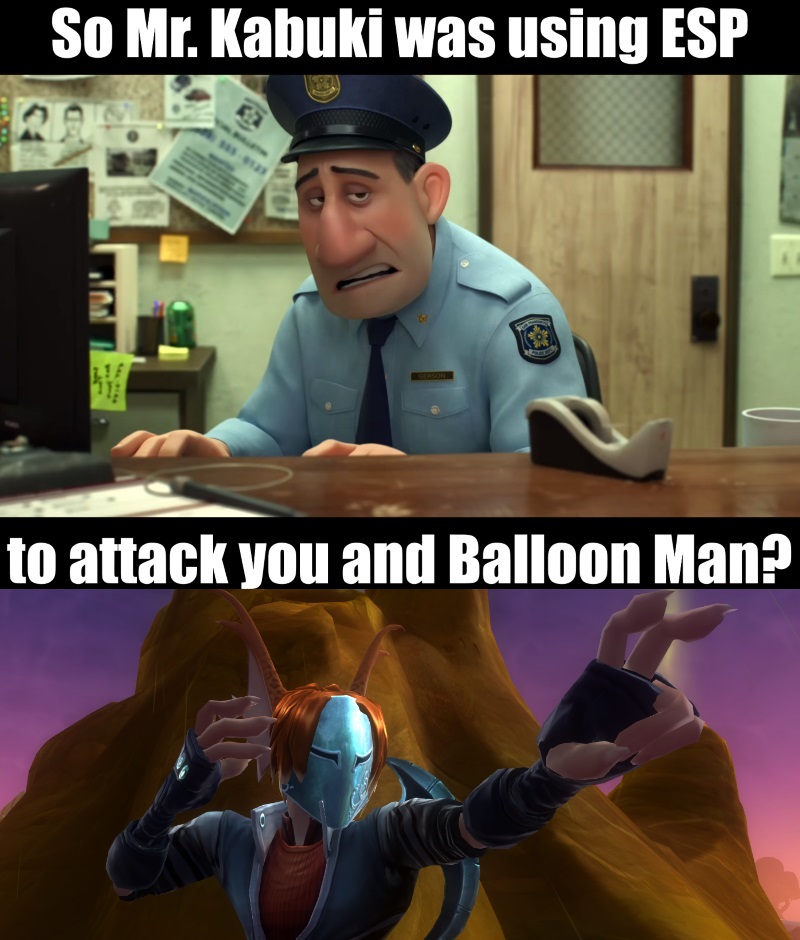
WildStar: The Joy of Esping

Coming soon to theaters: Disney and Wildstar’s new movie, Occasional Hero 6

Ever pick up a class in an MMO and it instantly just feels right for you? That was how it was when I played the medic for the first time. Nice big AoEDOTs, responsive attacks, and good burst healing for when things get rough. Then there are other classes that you hate at first, but then you give them another chance and fall in love. That’s how the esper has been. Espers have a combo mechanic similar to the medic’s (except that the medic’s actuators reset to full while out of combat and not zero like the esper’s psi points), but the main combo point builder for esper is a smallish line attack that doesn’t do much damage and takes about half a second to cast, meaning you spend 2.5 seconds building a full combo before you can do one big numbers hit. That is, at least, until you unlock a few more skills. As I did, I realized that there are a few cooldowns that build combo points more quickly, and from there things started to fall into place. I’ve also come to find the cast time on the main combo builder to be a blessing, because, being a line AoE, position is everything if you want to hit more than one target, and it gives me a half a second of telegraph visibility to move into place. It also helps me make sure I’m lined up for a couple of instant cast skills (reap and mind burst) that have similar hitboxes. I’m pretty happy with my hotbar loadout as well, with a nice mix of cooldowns and sustained DPS abilities.

One of the things I’m always surprised about is just how much survivability healers have in WildStar. As someone who prefers playing healers, I’m used to being at best a glass cannon and at worst a cloth-clad squishy rooted to one spot that practically needs a tank just to level. In WildStar, however, I feel like, between the mobility of casters and accessibility of self-heals, healers can really hold their own in solo combat. On my esper, I have two HoTs slotted, one that’s just a simple cast-it-and-forget-it, and one that’s an AoE that I can put around a target that damages enemies and heals allies, which is a really neat ability, especially for a game with a limited hotbar.

Overall, my esper is shaping up to be a lot of fun. Leveling is going a lot faster this time around–as it usually does the second time around–and I’m over 30 after just a couple weeks. I’m hoping to cobble together a set of support gear and try healing some dungeons soon, so wish me luck!

While we’re on the subject of WildStar, I wanted to say that I’m deeply saddened by the news of massive layoffs at WildStar’s studio Carbine this weekend. I hope that these talented people can land somewhere else quickly. I usually try to be optimistic about this kind of thing, but I can’t imagine how this can realistically signal anything better than maintenance mode going forward. It really is a tragedy, for my fellow players who love this amazing game, yes, but even more so for all of the people involved in its production.

Taking Inventory: So Many Games, So Little Time

The latter half of last week and the weekend I was sick with a sinus infection. I was just sick enough to be useless at my job, but not so sick that I couldn’t enjoy a little gaming between naps. I was a little restless, and ended up hopping around to a lot of different games. This inspired me to take inventory of all of the MMOs I’ve played recently and where they stand with me.

Guild Wars 2
I still keep coming back to Guild Wars 2 after all these years, despite some frustrations. When I think about it, I’m not entirely sure why this game is so sticky to me. Maybe it’s the fact that you can do the zones in virtually any order you wish that keeps it from getting stale. Lately I’ve been playing mainly on my latest 80, my thief. The Thief’s Daredevil spec has resonated with me a lot more than I expected, even before the major improvements thief received in the last patch (though, to be honest, that didn’t hurt my interest). I’m still making my way slowly through the expansion story, but it’s kind of on the back burner at the moment.

WildStar
I absolutely love WildStar, but I suffered some severe post-50 burnout on my Medic, to the point where I actually stopped playing it for about a month. I wanted to start dungeon healing, ran some dungeons as DPS with my guild to build up some gear, but, after doing some research, while I absolutely love playing DPS medic, I don’t think I like the way the Medic’s slightly-more-than-melee-range healing works. I’m more interested in healing the whole group than following the tank around and hoping some other group members get caught in my heal’s AoE. As such, I’ve started working on an esper. The esper was one of my first characters, and I didn’t quite get the class the first time around. Understanding the class and the game as a whole a little better, it’s starting to click with me, and I think I’m going to find it a lot more fun this time around.

Lord of the Rings Online
I see few MMOs on this list that represent polar opposites more than WildStar and LotRO, but these are the two games I’ve played the most of over the past few days. I recently joined a friend’s guild, something I haven’t done in that game in ages. The leveling process still drags on a lot longer than I’d like, but I love the world and the writing of LotRO, so I’m trying to focus on that experience. I’m still really happy with the Beorning class, which is more than I could say for the captain at this level.

Star Wars: The Old Republic
I was really excited about Knights of the Fallen Empire before it came out, but then WildStar happened, followed quickly by Heart of Thorns. One of these days I’ll be back to play the story, but sadly I’m not sure if I’ll ever really play this game beyond the story ever again. A lot has changed, and all of the lockbox drama going on right now is a big turnoff to me. The only thing I want from the cash shop is a permanent removal of my credit cap and weekly dungeon/raid limit, but it seems EA isn’t really interested in giving that to anyone who doesn’t shell out $15 every month. It’s really unfortunate, because with Star Wars being back in the spotlight again, I feel like a good Star Wars game could really capitalize on the hype, but instead all we get is a lockbox lightsaber that sputters vaguely like Kylo Ren’s.

Star Trek Online
I’ve had a serious love-hate relationship with this game from the day it launched. I love Star Trek, and I really like the space combat in STO, and even the ground combat isn’t so bad these days. Sadly, there are just so many little annoyances in this game that, when I do play, I almost never stay for long. One of those annoyances was the way skills and talents worked, and both are scheduled to be overhauled soon, so maybe I’ll stop in and take a look some time soon.

Rift
I keep dabbling in Rift. I find the idea of the game letting you build your own class really appealing, the mechanics of the game are solid, and the housing system seems good, but every time I think the game is going to pull me in, something about it just… doesn’t. I can’t really explain it. Maybe it’s because there are just too many choices when it comes to class design. Maybe I just don’t like the world. In any event, I think I’ll break into it eventually, but for now I continue to dabble.

Ark: Survival Evolved
I had planned to write up a whole post on this game, but I really couldn’t come up with much to say other than the fact that it’s extremely frustrating to get started, and that has kept me from enjoying the game. I’ve died countless times just trying to build tools or a shelter to stay warm long enough to survive the night, not to mention the countless times I’ve spawned on top of aggressive dinos. To be fair, I’ve only ever played by myself, so maybe if I found an active server I could find some people to help me get started, but if that’s what you’re expecting me to do, don’t give me a single player option. Maybe I’m just doing something wrong, but in its current state, I don’t think I can enjoy this one.

Elite: Dangerous
Speaking of capitalizing on Star Wars hype, this game wasn’t that interesting to me until I saw The Force Awakens. When it did, I remembered my childhood dreams of flying an X-Wing in a giant open universe, and Elite scratches that itch. I haven’t gotten into it as much as I had hoped–there’s a lot to learn, and a lot of it is unintuitive to me, largely because I’ve never been a space sim fan–but even when I’m totally lost I still enjoy flying around exploring planets and shooting at stuff.

Anyways, I could go on to some other games that I haven’t played in the past but haven’t gotten to yet, but I’ve already gone on longer than I intended, so I’ll just leave off here.

LotRO: Over Misty Mountains Cold… Without A Decent Map

Misty_Mountains_map
Last night in LotRO, I was questing along through the Misty Mountains. It’s a really pretty zone, I love how the intensity of the snow storms change from place to place, and you get to fight your first Nazgûl (not to mention there’s an undead dragon there, which I’ve always thought felt way more out of place in Middle Earth than the Rune Keeper, but what do I know). It was all going well until I got the breadcrumb quest to go to the Northern High Pass. That’s when I got completely, frustratingly lost. The Misty Mountains is one of those zones that I only vaguely remember because I’ve only completed it once, and mostly what I remember is not being able to get anywhere without running half way across the zone to get around a mountain peak. The fact that there will be a few zones that are just plain annoying to get around in is pretty much a given for any MMO, especially an older one, but the problem is severely aggravated by the fact that LotRO’s map, pictured above, is just about useless for navigating. They’re a nice idea–make the game map look like a hand drawn parchment map (complete with coffee mug stains; someone really should take better care of the zone maps) that seems at home in the Tolkien universe–but they really need an option for something with some more fine detail. Back in the day there used to be a Google Maps styled map in the lore book that would allow you to zoom in from the parchment map to the actual terrain map, but alas, the lore book is no more and if that map still exists I can’t find it. So I wandered around near the final E in Eastern Bruinen Source for a good fifteen minutes, running into several goblin villages and such, but not finding the way to the High Pass. Finally I gave up there and thought I’d try finding my way through the Giant Halls up through the South High Pass. The Giant Halls is a big chunk of the zone that’s designed for groups, but with the Beorning’s heal over time and generally good survivability (and a little luck), I’m usually able to solo my way through such areas as long as I don’t pick up more than one or two things at once (and as long as I’m not in a hurry). I slogged my way through this area, but all I ended up was finding in the area that appears on the map to connect to the high pass was some kind of town full of giants, which, as you can imagine, proved to be too much for my self healing abilities. Some day I’ll have to come back here with a friend and clear things out, but I then decided to turn my attention back to the north and see if I could find the pass I was looking for. After another half hour or so I finally found it, but by that point is was getting late and I decided to call it a night.

After a little research, I ended up finding this plugin which gives terrain maps (from the minimap), but no labels, and isn’t terribly user friendly. It’s better than nothing, but I still don’t understand why something like this isn’t built into the game itself. Crappy maps are one of the fastest way to frustrate your players, and frustrated players aren’t paying players. I often had the opposite problem with SWTOR’s schematic styled maps; they had so many details on them it was often hard to tell what was a door and what was just some bit of decoration or debris they decided to include on the map for some reason. Picking through the wreckage of Taris was the worst for this, especially since it came before speeders for Republic players. No map is going to accurately portray every bit of the zone, especially as zone designs seem to be trending toward more and more vertical space (Guild Wars 2, I’m looking at you), but it seems like certain developers were more interested in graphical style than functionality.

You know what, though? I actually still ended up having fun that night. Soloing areas designated for groups is one of the guilty pleasures that makes me love healing-tank classes. And as frustrated as I was with the map, at least most of the enemies are pretty spread out and easily avoided. I was also able to complete a few quests while searching everywhere for the path to another. Anyways, thanks for reading my rant. I’ll be tackling Goblin Town next, which I’ve heard means more frustration. I think I may have missed (skipped?) it entirely last time around, so we’ll see.

Licensed IP MMOs Aren’t A Bad Thing

Licensed MMOs
I saw a player proclaiming in Guild Wars 2 the other day that he or she would never play a game based on an unoriginal intellectual property. Their reasoning was the usual; since the creators do not “own” the story, they are limited in what they can do with the lore. It also opens the developers up to all sorts of criticism for “breaking lore” (don’t bring up the Rune-Keeper in LotRO global chat; it’s still a huge sore spot in the community over seven years later). As someone who just got back into Lord of the Rings Online for the umpteenth time, I actually disagree with this rather strongly. While ultimately gameplay is what makes a game good or bad, I think a licensed IP can actually be a really good thing for a game.

The License Sells The Game
Let be honest, MMOs are businesses, businesses need to market their products, and brand recognition is huge. I know it’s hard to imagine, but there are people out there–gamers even–who have never played an MMORPG and know absolutely nothing about Guild Wars, EverQuest, or possibly even (gasp) World of Warcraft. Those people, however, can probably identify several super heroes and have seen at least some of the Star Wars movies. Unless this hypothetical person has a friend who plays, there’s not much of a chance a game like Guild Wars 2 will catch their eye at Walmart, but if they recognize a franchise they like they’re significantly more likely to give it a try.

Many Players Already Know The Lore
I still feel fairly lost as to the lore of Guild Wars 2 after playing it for a couple of years, but as soon as I stepped into Lord of the Rings Online, I already knew the world because I had read the books and seen the movies (yes, in that order). The enjoyment in exploring Tyria is discovering new locations, whereas the enjoyment of exploring Middle-Earth is all of the moments that make you say “Oh! These are the trolls that Bilbo defeated!” or “Hey, this is the spot where Frodo got stabbed by a Nazgul!” or “Man, the Old Forest is a huge pain to find your way around in, just like Tolkien described it!” Both have their advantages and disadvantages, but I tend to prefer the latter a little, mainly because I don’t have to trawl dev posts and wikis to learn the lore. The game may have to fill me in on the current political climate of The Old Republic era or the fallout of the destruction of Romulus, but the game world at large is already familiar to me long before launch day.

Storytelling Limitations Aren’t Necessarily Bad
Licensed IPs are like the storytelling equivalent to Twitter; some people prefer it because of its limitations. And really, it’s not that limiting. There are still plenty of stories to be told in the Marvel universe or the Star Wars universe. If there weren’t, there wouldn’t be an ongoing franchise beyond the game. Furthermore, the vast majority of the individual writers, even in a game with an original IP, have a story pretty much handed to them. They may have the freedom to add a few minor characters or create events that change the world in small ways, but for the most part, by the time the game is a few years old the people who wrote the original story likely doesn’t even work there anymore, and if they do, you can be they don’t write every day-to-day quest added into the game. At that point the writers for a game based on an original IP is basically the same boat as someone who’s writing a story for a game whose IP is owned by a major movie studio. Yes, there may be more red tape and approval process for the licensed game, but either way they don’t have total freedom/

All of that said, I agree that there are downsides to licensed IPs. The biggest and most obvious downfall is the license itself. If Lord of the Rings Online was an original game it could go on indefinitely, maybe shifting into maintenance mode at some point, but still there for the loyalists to hang out in. I don’t mean to bring this up every time I post about LotRO, but its Tolkien license comes up for renewal next year, and I think there’s a real question as to whether or not all parties involved will feel like it’s worth their time and money to renew it. The other downside is that, for every player the IP attracts, there will be one more that it pushes away, like the player mentioned at the start of this post. I’ve played some pretty awful movie tie in shovelware games in my day, and I can see why players would associate those games with games like LotRO, SWTOR, or DCUO.

Do PvP and PvE Really Belong In The Same Game?

PvP Season 1
Let me say a couple things up front. First of all, PvP, in any of its forms, isn’t really my thing. I don’t usually do any, and, when I do, I usually enjoy it less than an equivalent PvE experience. Second, I’m going to use the broad term “PvP” throughout, but what I really mean is instanced PvP like battlegrounds and arenas. I understand the draw of open world PvP, even though I personally find it more frustrating than exciting. My intention in this piece is not, in any way, to tell PvPers that they shouldn’t enjoy playing in their preferred style, or to say that they aren’t “real MMO players” (whatever that even means). It is honestly just me putting my musings into words.

Lately I’ve been pondering why exactly PvP needs to exist within an MMORPG. Take Guild Wars 2’s Structured PvP (sPvP) for example. At any time, I can hit a button and be teleported to the sPvP lobby. Once there, I am temporarily leveled to 80 if I am not already, I can choose from a set of PvP-only gear, and my build switches to one that only activates in PvP. This begs the question, if my PvP levels, gear, and build are separate from those of the main game, and the rule set is different from that of the main game, in what way am I not playing a wholly different character in a wholly different game? Some MMOs, like Lord of the Rings Online and the original Guild Wars, go so far as to have whole separate classes and characters designed exclusively for PvP. Many others, like Star Wars The Old Republic and WildStar, have gear with stats that only affect your effectiveness against players. I get that there are a lot of rewards given to characters for use in the PvE side of the game as rewards for playing PvP, not the least of which is an alternative source of XP, but again, why bother having levels at all if you have to adjust players’ levels to let them be competitive?

I suppose the same arguments can be made about raiding; you have to be a certain level to even start, and you have to get good gear from dungeons or crafting to even get started. But at least raids play by the same rules as the rest of the leveling experience; same attacks, same stats, same characters, slightly different tactics, and more advanced strategies.

Despite all of this, I literally can’t think of a major MMO that doesn’t have instanced PvP in some fashion. I feel like there has to be a reason that I’m missing beyond “people would complain if they didn’t have PvP.” Don’t worry, MMO players will find something to complain about. Maybe it’s just something that has been a part of the MMO experience for so long that it feels wrong to not have it, but in this post-WoW genre where it seems like every other convention of what make an MMO is being challenged, I’m always surprised that no one has come out and said “We’re making an MMO, but we don’t think our target audience wants PvP, so we’re going to use our resources elsewhere.” After all, lots of games are coming out these days with forced open world PvP, and if you’re not interested in that style of gameplay then you can go play a different game. Why not a game without any form of PvP? It seems better than having the sorely neglected and unbalanced PvP game that I hear about so often in many PvE-centric games.

I see the explosive popularity of MOBAs as the natural answer to questions like this. League of Legends isn’t really that different from a WoW battleground in isometric view instead of shouldercam. Yes, I understand, there are many key differences and I’m talking beyond the realm of my experience here, but really, when you get down to it, it’s not that different from PvP divorced from the MMO. I think this can account for a lot of why the MMO genre is declining but still managing to stay relatively healthy despite dire predictions from the industry; the people who played MMOs just for PvP are moving away to other games–they can get their fix elsewhere with less of the stuff they don’t like as much–whereas players who prefer PvE are sticking with MMOs because there really isn’t anything else quite like them.

So what do you think? Am I completely crazy here, do PvP and PvE really belong in the same game? Is it necessary to have instanced PvP to be a feature-complete MMORPG? Has the presence or absence of PvP ever affected the likelyhood of you playing a given game?

LotRO: Home, The Long Way Round

Nulvar 37
Lord of the Rings Online is one of those games that I just keep coming back to, and, while I don’t usually stick around nearly as long with LotRO as I do with, say, Guild Wars 2 or SWTOR, there’s a certain quality to it that you don’t find in any other game that I really start to miss after a while. Toward the end of last year, I had several friends and fellow bloggers express a desire to return to a more traditional/WoW-like/tab target game after the recent glut of survival sandbox and action combat MMOs. At first, I didn’t feel the same pull–after all, I was thoroughly enjoying WildStar’s combat and overall experience–but then, be it because of peer pressure or just similar action combat burnout, a couple weeks ago the tab target bug bit me too.

LotRO wasn’t actually the first game I looked to. Proving the old adage that “there’s no such thing as bad publicity,” all of this negative press about Rift moving previously free stuff into its cash shop has reminded me that Rift is still a thing, and that I enjoyed what little I played of it. Once in the game, I found out that my friends who used to play Rift haven’t been on in months, and remembered that I hated the character creator, both of which are big turnoffs when I’m first starting out. Long story short, I ended up doing the exact same thing as last time, which is make a couple of characters, run them through the tutorial, then get distracted by other things. Maybe some day I’ll actually get into Rift, but it is not this day.

Once I settled on LotRO, I spent a lot of time deliberating about which character to pick up, probably far too much. The obvious choice was my highest level character, my level 52 Captain, but when I actually logged in and played her, I just didn’t feel the same connection to the class that I did the first time around. I don’t know if it’s the changes to the combat or just my own preferences, but either way, I had to put her back on the shelf for now. I also considered rolling a new character, as I often do when returning to a game, but, as much as I love Bree, I’ve done it so many times that it has effectively cured me of my altaholism in this game. So that left me to choose one of my existing alts. After collecting all of the characters I cared about all on one server (Gladden), I spent a good amount of time and stress simply staring at the character select screen trying to decide. I really loved my minstrel back in the day, I’ve always been intrigued by my low level Rune Keeper, and the Lore Master was a really unique mix of pet class and glass cannon mage. What I ultimately ended up with, however, really shouldn’t really come as a surprise: my Beorning. The Beorning is the most recently added class, and the one that I primarily played last time I played LotRO (which appears to have been about six weeks shy of a year ago). The Beorning is probably the most comfortable I’ve felt in a class in this particular game, largely because of its great survivability and sustained DPS. He is now only my second character to break the level 40 curse. My first character in the game, a Burglar, stalled out at level 39 because I decided I didn’t like the way he played, thus beginning a long tradition of abandoning characters after investing hours of time into them. Since then, I’ve only gotten my Captain past 39, and that was after a year or so of off-and-on playing during college. All of the others have been doomed to mediocrity either by other alts or shinier game releases. Of the seven characters I moved to Gladden, five of them were in the 30s (the other two are my Captain and a low level crafting character). I’m looking forward to finally delving into Moria with my Beorning. I know there’s a lot of hate for the zone (especially before the revamp), but I’ve always weirdly enjoyed underground/cave environments, so we’ll see.

So, while it’s been quite the ordeal settling back in, I’m happy to be back in LotRO. I’ve been a bit worried recently about how much time LotRO has, with Turbine losing Infinite Crisis, their first new game since LotRO’s launch in 2007, and LotRO’s looming Tolkien license renewal next year. I’ve decided that, be it next year or later, the game can only last for so long, and, I want to experience as much of Turbine’s version of Middle-Earth as I can while it’s still here.

Help, I Can’t Tell If I’m Having Fun In Hearthstone

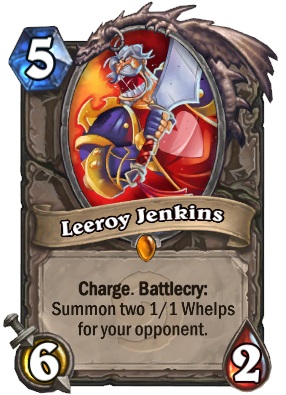
Leeroy Card

Stick to the plan!

I’ve never been in to the whole deckbuilding/collectible card game genre. Physical cards have always seemed like too much of a money drain, and, let’s face it, they’re basically the original lockboxes. Even after these games made the jump to the virtual world, it just wan’t something I was interested in enough to invest the time to learn all of the rules and strategies involved. When Hearthstone came out for PC, I gave it a shot. I figured that if anyone can make a game dumbed down accessible enough to be appealing to someone like me who’s too lazy to learn the more complex games, it’s Blizzard, and the WoW theme made it easy to relate to how the mechanics of the different classes and cards worked. My initial reaction was that, if they ever put it on my phone, I would play it. A year or so later they finally did just that, I downloaded it, played a couple games, and it has sat there, untouched, gathering cyber dust in my games folder ever since.

Then, a couple weeks ago, I was talking to my friend about collectible card games, and I decided to give it another try. Since then I’ve played a few games a day–it’s great game for killing time or playing while listening to something–and the weirdest thing is that, while I’m playing it more and more, I’m still not really sure if I’m having fun. I’m pretty sure I don’t hate the game, but I’m really not sure how much I like it. I think the thing that bothers me most is that I’m never sure if I’m winning because I did well or just because of dumb luck. There really isn’t a good metric for that. Then there’s the deck building aspect of the game. I’m not good at judging whether or not a card is good, which is a problem in and of itself, but I do know for sure that I don’t have a lot of good ones. The only way to get more good cards, aside from dumping money into card lockboxes and rolling the dice, is to play. I guess that’s what keeps me coming back to the game. I know there are a lot of so-called “netdecks” out there for various levels of play that are the equivalent of meta builds for MMOs–people with more time on their hands than I do have figured out the way to get the most utility out of a class, and are nice enough to post about it on the Internet–but not only does that seem like cheating, it kind of takes the fun out of the game for me. Even with my limited knowledge of the game, I like seeing how the new cards I get can fit into my various decks. I guess I could do with netdecks what I sometimes do with my MMO character builds; make up a build I like and find a similar meta build and tweak my current build based on anything I like from it. Honestly, though, I’m not sure if I’m enjoying the game enough to make it worth my time.

So… am I having fun yet? Am I playing wrong? Because I’d hate to be bored and not realize it.

Things Heart of Thorns Is Doing Right

HoT City
Recently I wrote about the philosophy shifts in Heart of Thorns and why they’re wrong. The TLDR version is that, while some of the changes actually bring the game more in line with what I would have designed the game to be, the fact remains that eighty level’s worth of content is still in front of it. I still believe that, but I didn’t want to leave you with the impression that I absolutely hated Heart of Thorns, so I wanted to share a few of the things I’ve really enjoyed about Heart of Thorns.

The Revenant
The revenant (the class, not the recent movie) has been everything I love about a Guild Wars 2 class. There really isn’t a weapon combination that I hate; on the contrary, I actually hate that I can only have two weapon combinations slotted at a time. I like the way legends work, changing my role with a touch of a button. Best of all, there are decent group healing options available. But perhaps more important is the fact that they added a new class. As someone who loves nothing better than creating new alts, I hate it when games refuse to add classes. I get it, balance is hard, especially in PvP, and adding a new class will inevitably throw off that delicate balance for a while, but for me it sells the expansion better than a new zone or a level cap bump. I don’t expect games to add a new class every expansion, but if you don’t, you either shouldn’t charge full price or you should give me something really big and interesting to do with the characters I have, not just a handful of new zones.

Elite Specializations
In addition to the new class, Elite Specs have renewed my interest in several classes. The chronomancer’s shield is cool and has some nice support mechanics, the scrapper’s hammer and drones are a nice addition to the engineer’s already varied arsenal, and the thief’s daredevil spec is just fun all around. I’m not sure if it counts, but the additional defense and healing shield with the revenant’s herald spec has saved me on more than one occasion. It’s a great middle ground between the simple WoW-style skill trees we’ve seen in so many games and some of the more intimidating systems like the original Guild Wars’ dual classing or Rift’s soul system. I just hope we don’t have to wait a couple of years for another expansion before we get another set of elite specs for all of the classes.

Storytelling
Guild Wars 2 has always tried really hard to be story driven and fallen flat every time. Aside from some dubious decisions regarding gating areas behind (admittedly, one time) mastery grinds, Heart of Thorns has done a much better job in that department than either the base game or the living world story. It has been a lot less predictable and trope-filled than the original story (despite still revolving around slaying a magical dragon). The best move is replacing the weird looking-past-each-other (which I’ve complained about many times, so I won’t reiterate it here) with actual in-world cutscenes, and, perhaps more immersive, voiced conversations that don’t take you out of gameplay. For instance, early on there’s a moment where you meet up with some Hylek, and you talk to them as you walk to their village, rather than talking first and then walking in awkward silence as you did in many of the base game story instances. Similarly, there are times when you find NPCs outside of instances and have to stop and chat with them to find what you’re looking for.

Specialization Skins
I know I’ve complained about cosmetic fluff being the only incentive for certain content, but I love the idea that each elite spec has a themed weapon (and, in the case of the Revenant, an armor set). The scavenger hunt to collect all of the random items could only feel fun in a game where cheap quick travel points dot the landscape, and it gives level 80 players a good excuse to visit a lot of the pre-expansion zones.

All in all, despite a few annoyances, I think Heart of Thorns is a solid expansion. ArenaNet can’t help it that they made some choices when developing the base game that didn’t pan out the way they had hoped, and now they’re doing the best they can to stay faithful to the original vision while forging ahead in the direction that the majority of players want. Also, as discussed in a recent episode of the Massively OP Podcast around the 17:30 mark (I promise I’m not just linking that because they answered my question about LotRO in the mailbag section), ArenaNet has always been good at trying something new, and, if the players don’t like it, admitting it was bad and scrapping it. And for that, if for nothing else, I have to give them a lot of respect, because that’s really hard for a lot of companies to do, MMO developer or otherwise.

Philosophy Shifts in Heart of Thorns, And Why They’re Wrong

If you follow the Guild Wars 2 community at all, you’ve probably noticed a lot of chatter about the fact that the design philosophies behind the game seem to have shifted over the last few years. The changes have their good sides and their bad sides, but either way a lot of people (myself included) have seen the changes as a concession that some of the ambitious concepts around which Guild Wars 2 was designed may not be the best for an MMORPG. Let’s take a look at what some of those are.

No Trinity -> Kinda Sorta Trinity(ish)
Part of the Guild Wars philosophy has always been that you can throw any random group of characters together and have a dungeon party. You don’t need to find a group with the traditional tank/healer/DPS group makeup because those don’t exist. As long as everyone knows not to stand in fire you’re good. But with Heart of Thorns came a lot of terminology that sound a lot more like Azeroth than Tyria. Most notably the inclusion of raids, but also a few little things like a “heavy healer” (the ranger’s Druid elite spec) and tanks with taunts. That said, this is still a Guild Wars game. There may be taunts, but all they do is force the target to attack the taunter for a given period of time; they don’t actually generate extra threat. And it’s not like your raid is going to wipe every time because you didn’t have a tanked out Guardian in the mix. You may have a designated healer, but they’re going to be spending a lot more time doing DPS than they would in another MMO. In other words, kinda sorta trinity(ish).

Everything is Soloable -> Group Helpful
I almost labeled this section “Group Required,” but then decided that that’s a bit of an exaggeration. I’ve successfully soloed all of the content I’ve done so far, aside from occasionally wandering in on a group event in progress, but I’ve definitely spent a lot more time on the ground while soloing in the expansion content than I ever did in the base game, even in the notoriously frustrating Orr zones. Designing a zone that requires players to help each other sounds good on paper, and honestly, right now, while the content is new, it works fairly well. But what happens two or three years from now when the vast majority of players have completed all of the zones and aren’t interested in going back? Interestingly, this seems to be how Orr was originally designed as well, and ArenaNet has had to go back and nerf the whole zone several times, thinning out mobs and making quests and events easier, even creating a solo version of the story’s ending dungeon. Apparently they didn’t learn from Orr, because I predict they’ll be doing the same thing with Heart of Thorns within two years of its launch.

No Grind -> Masteries Grind
One of the more notable design promises that ArenaNet actually delivered on quite well in vanilla Guild Wars 2 was the idea that leveling wouldn’t feel like a chore. This was accomplished by handing out XP for, not just combat and quests, but just about every activity you could think of–crafting, gathering, events, PvP, and literally just walking around places you’ve never been. The one-to-cap leveling time is shorter and easier than any other game I can think of (there’s a reason why I have three 80s in Guild Wars 2 and in most game I’m lucky to even have one). Perhaps if the game hadn’t done this so well with Central Tyria it wouldn’t have felt so jarring to be presented with such a grind when we got to Heart of Thorns in the form of masteries. And it doesn’t help that many of them seem so contrived. Some of them, like the various improvements to gliding, seem like natural progression, but others, like Exalted Markings or Itzel Language, are clearly just barriers to slow you down so you can’t blow through the content too fast on your first time through. It has been argued that all games do this, and those that don’t get complaints that there isn’t enough to do, and, while that’s true to a certain extent, the difference here is that they didn’t do a very good job making it feel interesting.

I’m sure others could come up with more, but you get the idea. Now, I know what you’re thinking. “But you like some of those things in other games! You’ve complained before about the lack of trinity in GW2! Why would you call these things ‘wrong’ now?” The answer is that they’re making these changes too late. If the game had launched with these philosophies, it would be great. But it didn’t, it launched with the philosophies on the left, and now it’s trying to backpedal. The problem is that all of the content made under the new philosphy is gated behind 80 levels of content designed under the old philosophy. In other words, short of a radical retooling of the content that was made before (i.e. dungeons, fractals, and all of the zones in central Tyria), which we all know isn’t going to happen, people who like the kind of content in the above right column will have to dig through 80 levels of stuff that isn’t made with their preferred game style so they can get to the stuff that is. What’s even worse is trying to force the two styles together. For instance, one of the fundamentals of Guild Wars 2 that still holds true in the expansion is that there’s none of this dreaded gear treadmill stuff you hear so much about in WoW clones. Since that’s true, why would I want to do raids? While I haven’t even set foot in any of the new raids, the only reason I’ve heard so far is to get gear that’s just a new skin for gear with stats that I could have gotten before the raids existed. Furthermore, what about all of the established players who liked Guild Wars 2 because of the philosophies that it was originally built around? Sure, none of that old content went away, but you can only go so long on old content before people start to get bored and leave.

So while, personally, I’m really ok with the philosophy shifts above, I know a lot of people who aren’t. The changes aren’t “wrong” because I don’t like them, they’re wrong because they don’t make sense with the game as a whole.

If you enjoyed this post, you may also be interested in the followup, Things Heart of Thorns Is Doing Right.